
Finding Fair Oaks Resident Records
Fair Oaks is a Census-designated place inside Fairfax County, not an incorporated city with its own clerk or master household file. That matters at the first step. A known address should be checked in the county’s Master Address Repository, iCare, and Jade map tools before a name is tied to it. A known name calls for a narrower question: perhaps a recorded instrument, a public court index, a permitted voter-list product, a historical directory, or a state record. No official source found for this project is an unrestricted list of every current Fair Oaks resident.
Each source has a different job. The property display may identify an owner of record and a parcel. The Circuit Clerk’s records may identify parties to a deed or case. A directory can place a household at an address in the year printed. Those results should not be blended into a single claim about who lives somewhere today. Use two independent records when identity matters, and keep the source date with every result.
- Confirm the street address, postal ZIP, and parcel context in the county address tools.
- Check the record type that matches the question, such as a deed index for title or a directory for a dated household lead.
- Compare spelling, date, parcel, organization, or another independent detail before treating two results as the same person.
- Use the office, library, counter, or request route when the portal does not hold the needed record.
Fair Oaks Begins With Fairfax Geography
Fair Oaks has several overlapping labels. The Census CDP has GEOID 5126875. The Fair Oaks Police District, Fair Oaks Mall, Fair Oaks-branded associations, and a Fairfax postal address are related names, but they are not the same boundary. The county seat is the independent City of Fairfax, which is a separate government. County MAR results exclude independent jurisdictions named on its page, so an address near a boundary deserves an extra jurisdiction check.
Postal geography is separate as well. County sources give Fair Oaks-branded examples in both 22033 and 22030. A ZIP or postal city helps route mail, but it does not prove CDP membership or identify the record custodian. For a location-sensitive search, save the site address, ZIP, MAR status, parcel or PIN, subdivision, and source date. That small crosswalk prevents a police-service area or shopping-center name from being mistaken for a civil boundary.
Fair Oaks Address Verification Chain
Fairfax County’s Master Address Repository is the county’s authoritative site-address source. It can be searched by address, parcel, or street and supports number, street name and type, city, ZIP, subdivision, created date, expired date, and current or historical status. That is useful when an older directory uses a changed spelling or when a mailing address differs from the site address. MAR selections can be downloaded, but an exported row is still an address record, not proof of a household.
The Fairfax iCare address search provides the captured property-lookup form used in this Fair Oaks residents directory workflow.
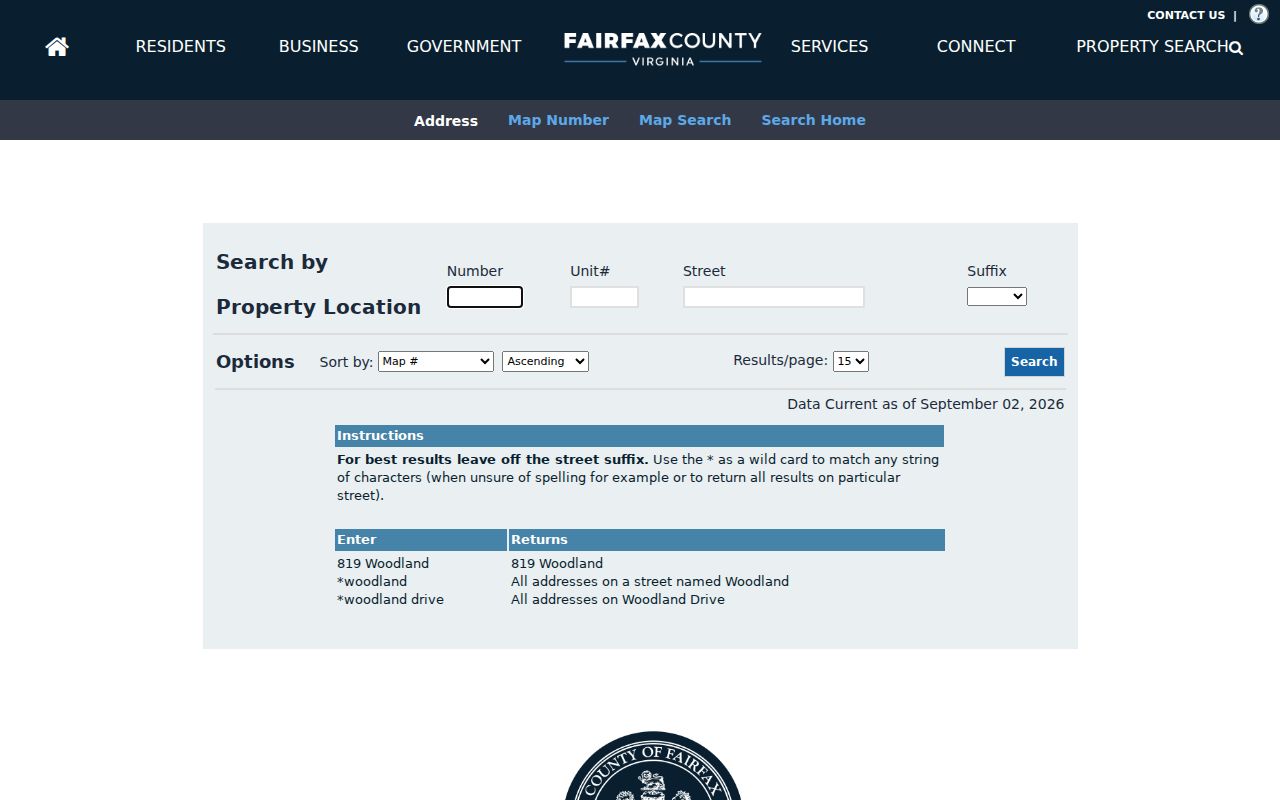
The captured iCare address form shows the county’s number, unit, street, and suffix fields. It is the next useful check because the property display supplies assessment and parcel context that can be compared with MAR and Jade.
| Fairfax tool | Useful search fields | What it helps confirm |
|---|---|---|
| MAR | Address, parcel, street, ZIP, status | Official site-address history and jurisdiction context |
| iCare | Number, unit, street, suffix | Assessment, ownership display, sales, tax map or PIN |
| Jade | Address, PIN, intersection, subdivision | Mapped parcel, layers, reports, and nearby features |
Note: iCare advised leaving the suffix blank for broad results and using an asterisk for street-name variants; its live form showed a maintenance notice on September 2, 2026.
Fair Oaks Resident Records Offices
Fairfax County offices hold the core records behind the Fair Oaks residents directory. The Department of Tax Administration maintains assessment information. GIS maintains address and mapped-parcel layers. The Circuit Court Clerk handles recorded instruments and court records, while the Historic Records Center keeps original and older county series. The Office of Elections handles a voter’s own-status route and formal voter-list requests. For an address-led search, the fuller parcel and deed sequence is available through the Fair Oaks street directory.
Fairfax Circuit Court Clerk, Land Records
Suite 317, Fairfax County Courthouse
4110 Chain Bridge Road, Fairfax, VA 22030
703-691-7320
Fairfax DTA Property Records
County assessment and parcel service
Fairfax County, Virginia
703-222-8234
Fairfax Office of Elections
12000 Government Center Parkway, Suite 323
Fairfax, VA 22035
703-222-0776
Fairfax iCare Records for Fair Oaks
iCare offers address, map-number, and map-search paths. Its public display can show ownership, sales, assessed values, physical characteristics, tax-map information, and a PIN. County data is updated twice weekly, and assessments are stated as of January 1. The internet display is authorized by Virginia Code §58.1-3122.2, but an owner name may be withheld from the internet record on request. A tax record is a starting point, not a title opinion.
When iCare yields a deed book and page or a parcel identifier, take that identifier to the Clerk’s land-record route. The county’s Jade GIS landing page links the address, parcel, and map tools needed to compare the site with its map geometry. A mailing address, a business entity name, or an owner of record can differ from an occupant. Keep that distinction in the search notes instead of filling it with inference.
- Parcel
- A defined tract in the county tax and map system, often identified by a PIN.
- Roll
- A list maintained for a defined purpose, such as assessment or registration, not a complete household census.
- Index
- A finding tool that points to a record; it may not include the document image.
- Criss-cross directory
- An address-arranged directory that can lead from a street entry to a dated name listing.
Current Fair Oaks Resident Sources
There is no one modern Fair Oaks resident roll available to the general public. The closest current sources are purpose-specific. Assessment data connects an owner of record to a parcel. Jade and MAR resolve the address itself. A voter may use the Citizen Portal to view their own status, while public voter products require the Virginia request form and its requester, product, and filter choices. Regulatory and entity searches can confirm public roles, but their listed addresses should not be recast as personal residence.
| Source | Fair Oaks connection | Custodian | Access route |
|---|---|---|---|
| iCare property display | Owner, PIN, assessment and sales context | Fairfax DTA | Public portal, phone |
| MAR and Jade | Site address, parcel and mapped context | Fairfax County GIS | Public tools, map reports |
| Voter-list product | Statutorily limited registration information | Virginia Elections | Request form or registrar inspection |
| DPOR or SCC result | Public license or organization role | Virginia agencies | Public portal, records route |
A person-name question needs careful verification across those limited sources. A Fair Oaks resident lookup separates a court, vital, license, organization, and address lead so the result is not overread.
Fair Oaks Voter Access Rules
Virginia’s voter self-service route is for a voter’s own registration status and changes. It is not an unrestricted lookup. A public voter-list order instead uses the state form, which asks for requester type, contact details, a product choice, a locality or district filter, and election or date specifications. The Fairfax Office of Elections is the local contact for formal questions and statutory inspection routes.
Virginia Code §24.2-444 makes defined public list fields available, but it excludes sensitive data, protected residences, and other listed information. A Fair Oaks request may have to use Fairfax County, precinct, locality, district, ZIP, or another supported filter rather than assuming the CDP is an available category. The right response to a protected address is to leave it protected. It is not a prompt to combine other records in search of the actual location.
Fair Oaks Court and Request Routes
Fairfax Circuit eCaseSearch is a free public index for non-confidential circuit civil and criminal information beginning October 18, 2004. Its party-name route requires a last or company name of at least two letters and allows an optional first name. Case-number searches use the court’s stated formats. Results are capped at 100, documents are not supplied, and sealed matters are excluded. A court index can help distinguish same names; it does not establish current residence or a conclusion about a person.
The screenshot of the Fairfax County FOIA route shows the county’s request path for existing county administrative records. VFOIA requests should identify the agency, existing record type, Fair Oaks or Fairfax geography, time range, and preferred format with reasonable specificity.
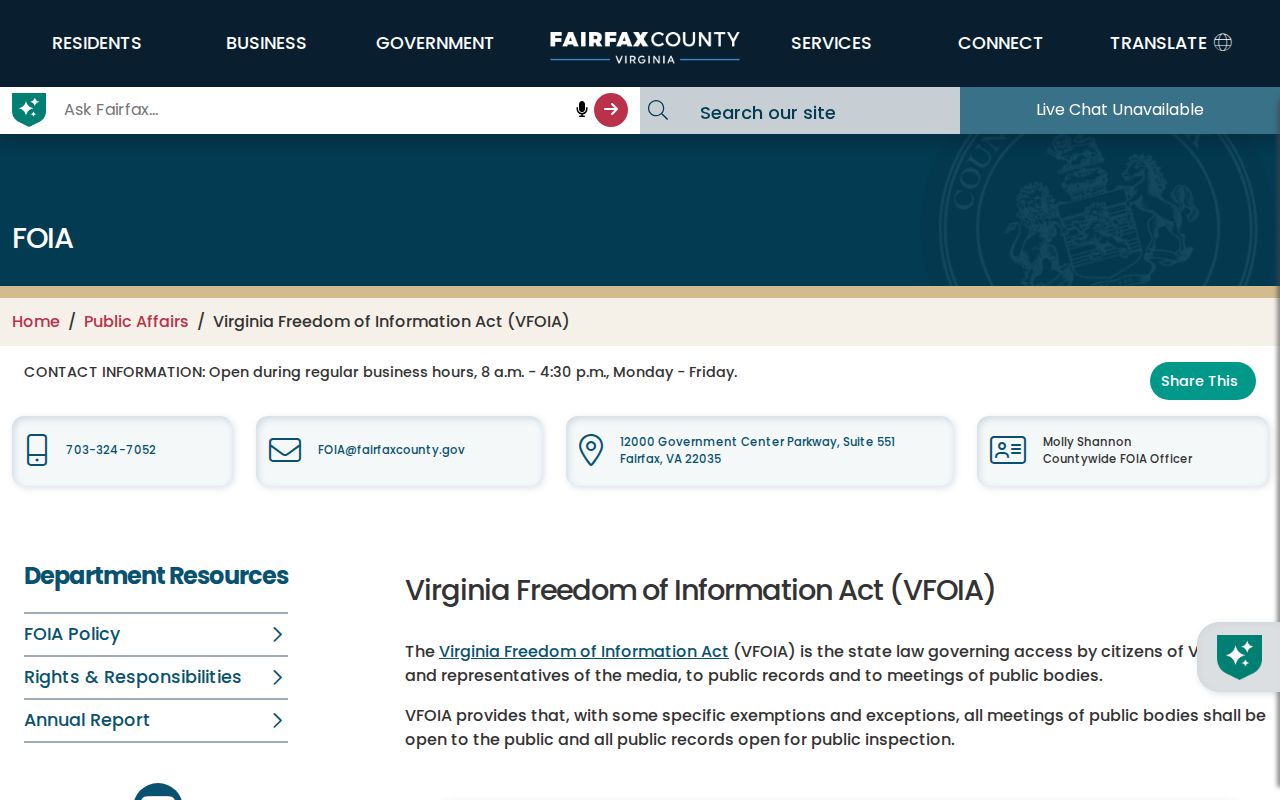
Virginia FOIA generally calls for a response within five working days, with additional time possible under the statute. Actual costs may be charged and an estimate above $200 may require a deposit. Court records use the Clerk and court channels rather than an ordinary county FOIA request.
Virginia Vital Records for Fair Oaks
Virginia’s Office of Vital Records controls current certificates and the eligibility rules for Fair Oaks events. The current fee is $15 for a certified copy or search, effective July 1, 2026. Online requests, mail, Richmond walk-in service, and a local registrar or health-district confirmation are different access channels. Forms require a signature, legible ID copy, and payment. Immediate-family eligibility is limited, and guardians need custody documentation.
The state’s public-release intervals and confidentiality rules matter as much as the name being searched. Birth records generally open after 100 years, while death, marriage, divorce, and annulment records have 25-year intervals under the applicable rules. The historical Fairfax path can differ: the Historic Records Center has local birth and death series for 1853 to 1896 and 1912 to 1917, while the Library of Virginia is a route for older material. Identify the exact series before ordering a record.
The state Vital Records service displays the current fee, eligibility, ID, payment, mail, walk-in, and timing information captured for this build.
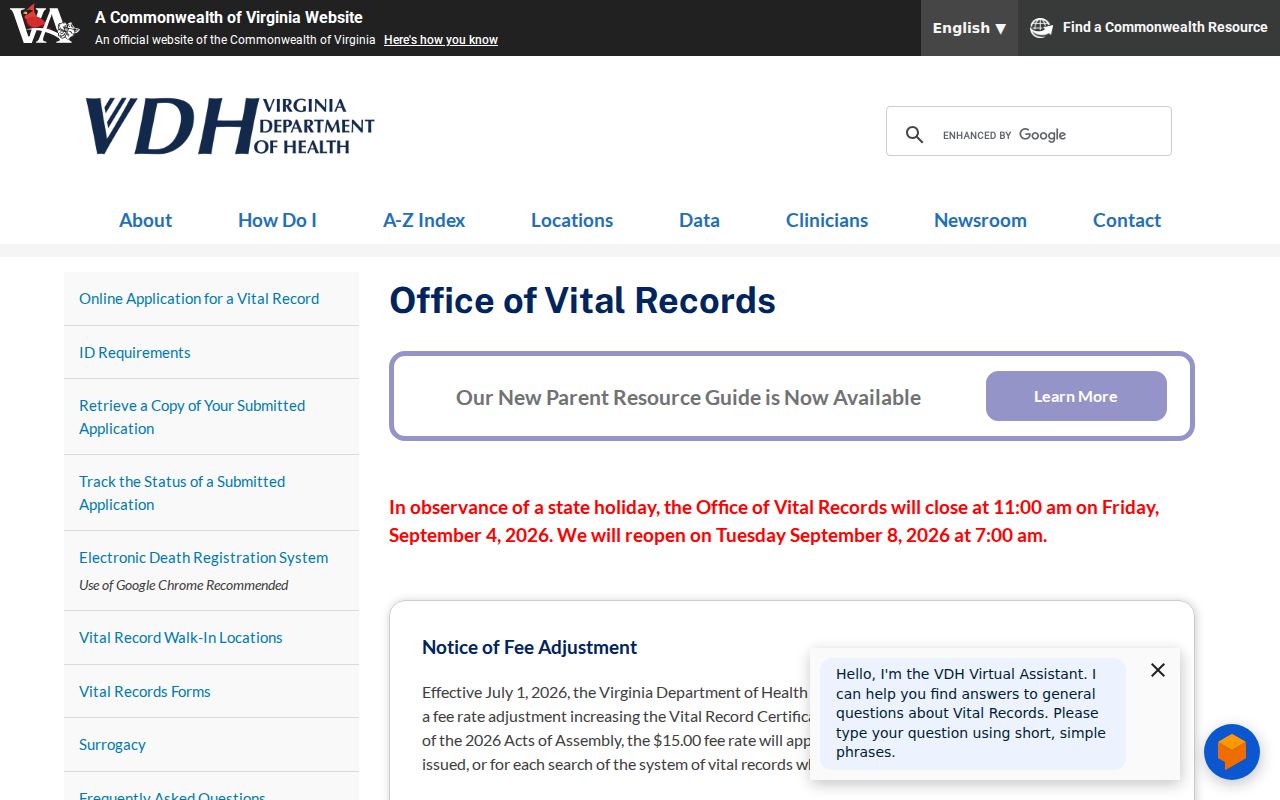
That official route is the place to recheck a fee or processing estimate before applying, because older forms may still show a superseded amount.
Fair Oaks Public Role Searches
The Virginia DPOR License Lookup accepts search text and an advanced path for name, license number, address, or license type. Public results can show license number, name, issue and expiration, classification, status, and address of record. It does not include phone numbers. That address is a regulatory contact field, not an assertion that someone lives at the location.
The Virginia SCC Entity Search uses entity name or ID and can return the entity’s ID, name, type, address, formation information, and status. Detail records may identify an agent, registered office, principal office, and filings. These tools answer a narrow organization or license question. A person’s association with an entity must be separately verified against an address or record that actually supports the claim.
The captured SCC search screen shows the entity name and entity ID entry points for that limited public-record route.
It is useful for recording an organization link, a filing date, or a status, then keeping that information distinct from a person’s residence.
Historical Fair Oaks Resident Directories
The Fairfax County Virginia Room is the principal local shelf for Fair Oaks directory research. Its directory holdings include the Fair Oaks-inclusive Fairfax Community Directory from 1980 through 2005-06, followed by Your Community Phone Book volumes from 2006-07 through 2009-10 and listed ZipLocal Fairfax Phone Directory volumes from 2010-11 through 2016-17 with gaps. The room also has maps, newspapers, manuscripts, yearbooks, microform, and a designated CPAN station. Its physical collections complement online discovery tools.
Older county and regional volumes, including 1880 and 1890 county listings, a 1906 county directory, telephone books, and reverse or criss-cross sources, may use a broader exchange or neighboring locality name. Capture the title, edition, locality statement, page, arrangement, and exact wording before treating an entry as Fair Oaks evidence. A missing listing may mean an unlisted number, a geographic gap, or an omitted household. The complete collection treatment is in the Fair Oaks city directory.
The Virginia Room directory holdings page identifies the Fair Oaks-inclusive runs and the ways titles describe their geographic coverage.
Virginia’s DOC locator is the captured official state-custody search screen assigned to this Fair Oaks residents directory reference.
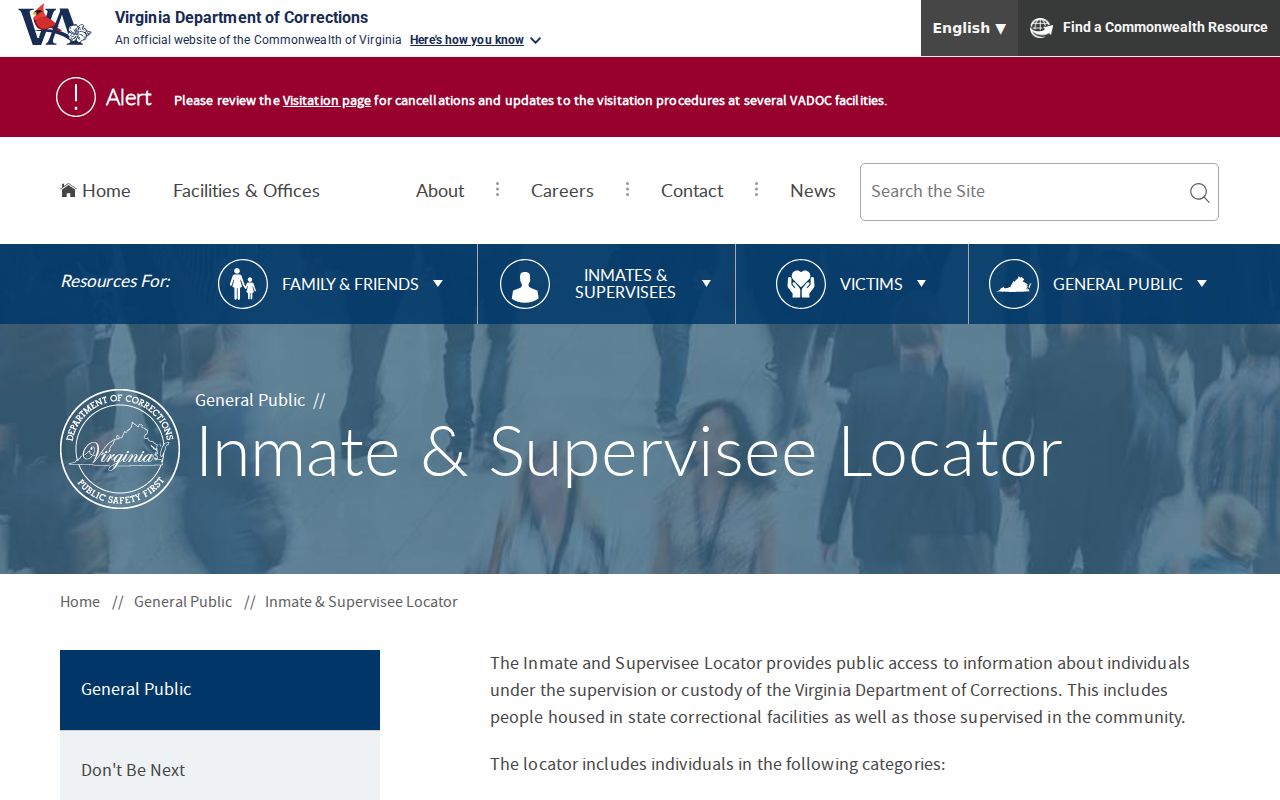
This captured state locator is a separate official custody-status route. It accepts a first-name prefix, last name, or DOC ID, updates daily, and does not substitute for a Fairfax local-detention roster.
Fair Oaks Custody and Registry Limits
No official public Fairfax County Adult Detention Center roster or name-search portal was located. The Sheriff’s Adult Detention Center FAQ supplies a human fallback at 703-246-2100, with its phone tree for inmate information, bonds, property, finance, and transportation. A phone contact is not a searchable roster and should not be republished as one. The state DOC locator covers state custody or supervision, not the local detention population.
Virginia’s registry has official name, address, city, county, ZIP, contiguous-ZIP, and neighborhood-map filters. Virginia State Police says it does not assess risk or danger, and state law restricts use. It should never become a list of people or a claim about a whole Fair Oaks area.
The official registry screen shows its name, address, ZIP, and neighborhood-map filters alongside the state disclaimer.
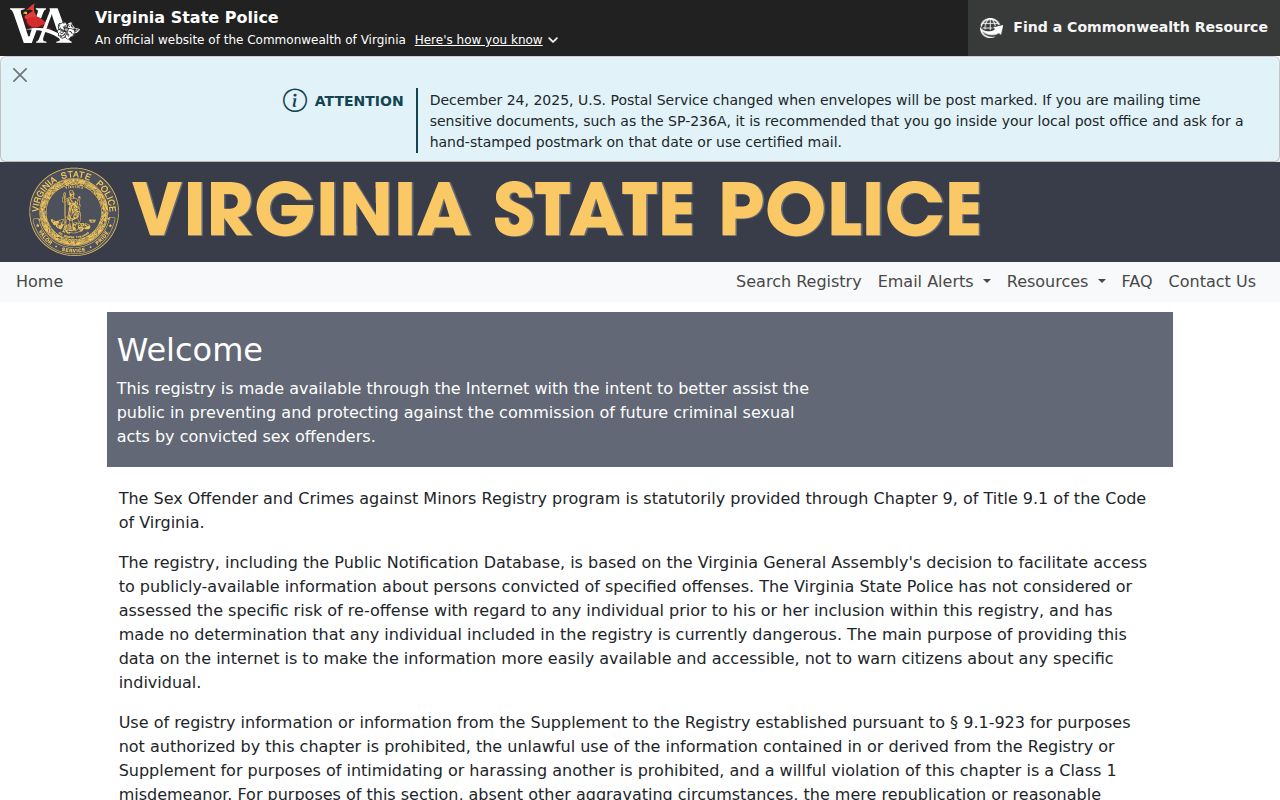
Use it only for the statutory record question, retain the source date, and rely on the official notice rather than treating a search result as a safety assessment.
Fair Oaks Historic Record Gaps
Historic Fair Oaks research reaches Fairfax County repositories rather than a municipal archive. The Historic Records Center holds original deed books from 1742 to 1942, real-property tax books from 1851 to 1980, probate, chancery, historic vital series, and other county records. Fairfax is a lost-records locality because Civil War destruction and related events left gaps. The records also lack birth and death registration for stated periods, including 1897 through 1911 in the research material. A no-result is not proof that a person or property did not exist.
The HRC’s current preservation effort is a useful example of why a historical search may need a counter visit or archivist assistance. A 2025 Library of Virginia grant supports conservation of the 1879 Fairfax atlas and land-tax books from 1892, 1900, and 1910. The HRC reported roughly 2,300 books and 750 boxes. Fragile volumes have handling limits, and appointments are recommended. Bring an exact date range, name variants, and a deed or tax reference where possible.
Fair Oaks Privacy and Record Limits
Virginia’s Address Confidentiality Program protects a designated address for qualifying participants. Public records that identify a participant are exempt from VFOIA, and a designated address must not be used to deduce an actual location. Other boundaries apply to protected voter addresses, sealed or juvenile court matters, adoption files, confidential vital records, and inmate-account information. The strongest result can be a clear statement that the record is restricted and the authorized office controls access.
Virginia FOIA does not require an agency to create a new resident list, answer a research question, or build a report from unrelated systems. Request an existing record series, define the record type and filter, and ask the custodian about format and cost. The privacy boundary is part of the answer, not a gap to work around.
Fair Oaks Source Dates Matter
Address tools are maintained systems, not static books. Fairfax noted a MAR and map-service update on July 31, 2026, and iCare can show maintenance status. Directory entries have an edition date. A court index has a coverage start. A vital-record fee has an effective date. Record the search date, source date, coverage dates, exact spelling, and whether the result was current, historical, restricted, or unavailable. That habit makes a Fair Oaks directory search more reliable and makes a later recheck possible.
For federal matters, PACER is the separate access route for Eastern District of Virginia cases not found through Fairfax or state court tools.
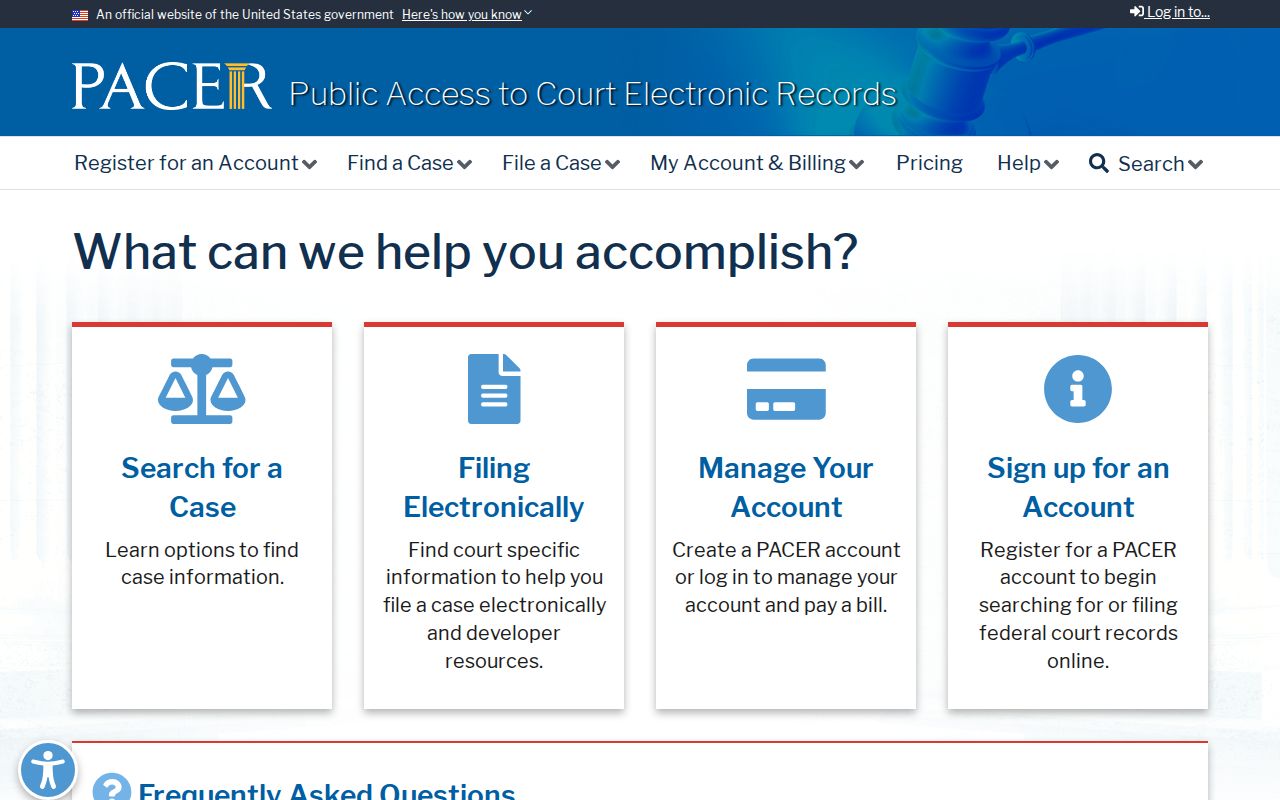
The federal portal belongs in a separate record trail, with its own account and document-access rules, rather than being treated as an extension of county indexing.