
Fair Oaks City Directory Holdings
Fair Oaks has no municipal clerk collection or one official book of every household. The strongest local starting point is the Fairfax County directory holdings list, which names Fair Oaks in the geographic wording for several runs. The Fair Oaks Community Directory sequence is particularly useful because the entries describe a broader Fairfax-area group of communities rather than pretending to trace a legal CDP boundary. Treat each volume as evidence for its own edition date and stated reach.
| Collection | Years | Where Held | Access |
|---|---|---|---|
| Fairfax Community Directory, Fair Oaks coverage | 1980 to 2005-06 | Fair Oaks research at Virginia Room | Library collection; check the volume's locality wording |
| Your Community Phone Book, Fair Oaks title | 2006-07 to 2009-10 | Fair Oaks research at Virginia Room | Physical local-history collection |
| ZipLocal Fairfax Phone Directory, Fair Oaks title | 2010-11, 2011-12, 2013-14, 2014-15, 2016-17 | Fair Oaks research at Virginia Room | Physical local-history collection |
| Regional and criss-cross books with Fair Oaks leads | Selected years from 1938 to 1980 | Virginia Room and listed repositories | Confirm the listed service area before using a hit |
The dates are holdings, not proof that every year or household is present. A Fair Oaks name can be absent because a number was unlisted, an edition skipped an area, a spelling changed, or the book used a telephone-exchange geography. Record the cover of the Fair Oaks edition, locality introduction, year, page, and the form of the name before comparing a Fair Oaks volume with another Fair Oaks source.
Note: A directory entry is a dated publication lead, not proof that a person currently lives at the printed address.
Fair Oaks Directory Years
The locally named sequence has a useful rhythm. Fair Oaks appears in Fairfax Community Directory volumes from 1980 through 2005-06. Your Community Phone Book then carries a Fair Oaks title through 2009-10. ZipLocal Fairfax Phone Directory volumes with Fair Oaks in the title survive for 2010-11, 2011-12, 2013-14, 2014-15, and 2016-17. The spaces between listed editions matter. A missing year should be logged as a Fair Oaks coverage gap rather than turned into a conclusion about a Fair Oaks household.
- 1880 and 1890: Chataigne's Fairfax County listings provide older countywide leads.
- 1906: Fairfax County Virginia Directory provides a later countywide reference point.
- 1980 to 2005-06: Fairfax Community Directory volumes explicitly include Fair Oaks in their stated geography.
- 2006-07 to 2009-10: Your Community Phone Book continues a Fair Oaks-titled run.
- 2010-11 to 2016-17: Selected ZipLocal Fairfax Phone Directory editions retain Fair Oaks in the title.
Older Fair Oaks research may require a wider label. The Virginia Room also identifies the Fairfax County Virginia Directory for 1906, Chataigne's Fairfax County listings for 1880 and 1890, a 1966-67 Fairfax Local Telephone Directory, and selected Fairfax City and Fairfax West volumes. Those titles can support a Fair Oaks search only after their front matter's Fair Oaks wording or exchange coverage is checked. Postal labels and nearby-city titles often spill across the local Fair Oaks area.
The Fairfax directory holdings page is the source for this collection view.
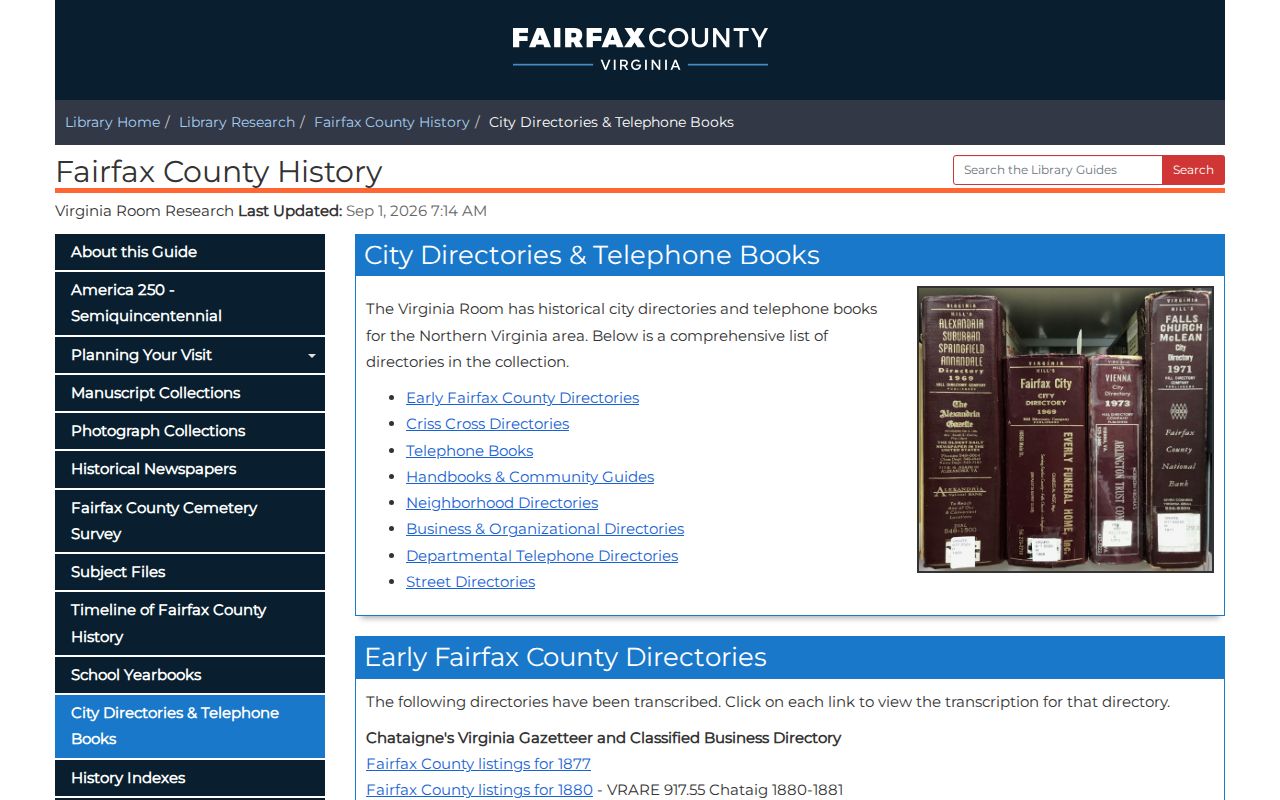
The holdings display for Fair Oaks research is a practical reminder to capture both a Fair Oaks title and the volume's scope before using a listing in household research.
Fair Oaks Virginia Room Access
The Fairfax County Virginia Room is the local directory shelf for Fair Oaks work. It is on the second floor of the City of Fairfax Regional Library, 10360 North Street, Fairfax, Virginia 22030-2514. The room lists telephone and city directories alongside maps, newspapers, manuscripts, photographs, subject files, oral histories, yearbooks, and property-history guides. Its contact number is 703-293-6227, option 6, and its email is va_room@fairfaxcounty.gov. Listed regional-library hours are Monday through Wednesday, 10 to 9, and Thursday through Sunday, 10 to 6, but the library asks visitors to check current hours first.
For Fair Oaks research, the room offers more than a shelf of books. Microform reader-printers can save scans to USB, which helps preserve an exact directory page or newspaper clipping. Eight internet stations and a designated CPAN station let a visitor compare a dated Fair Oaks listing with court or land index work, maps, and local newspapers. A visitor working on Fair Oaks research can ask staff about the collection and its access tools, while remaining responsible for evaluating the Fair Oaks record.
The Virginia Room source page shows the room's Fair Oaks local-history and genealogy setting.
For a Fair Oaks surname, old street, photograph, school connection, or directory year, a visit can combine local reference help with the original printed source.
Reading Fair Oaks Directory Entries
A Fair Oaks city directory entry should be read as a compact, dated record. The Library of Congress notes that city and telephone directories may be alphabetical, address arranged, telephone arranged, or organized for businesses. Depending on the volume, an entry can supply a name, address, telephone detail, spouse or household notation, organization line, occupation, or civic information. Not every edition carries every field. Because no live Fair Oaks entry image was inspected during research, the safest practice is a field inventory, not a made-up sample listing.
| Name as printed | Preserve initials, spelling, married-name form, and any title exactly. |
|---|---|
| Household or organization line | Record it as a listing type, rather than assuming it proves every person at the address. |
| Street address | Keep the house number, street spelling, apartment or unit detail, and printed locality. |
| Telephone or exchange | Copy it only when shown and retain the edition that displayed it. |
| Business description | Note the wording, but keep it distinct from a claim about a current residence. |
- Criss-cross directory
- A reverse directory arranged by street or address, used to move from an address to the printed name.
- Householder index
- An arrangement centered on the named household listing, which may omit other people connected with the address.
- Abbreviation key
- The volume's own explanation of shortened words and symbols. Photograph or transcribe it with the entry.
Keep the locality heading with the entry. Fair Oaks was often part of a larger Fairfax County, telephone-service, or suburban area, so a nearby place in a title is not enough to establish whether a particular Fair Oaks entry applies to an address in Fair Oaks.
Fair Oaks Criss-Cross Volumes
Criss-cross books give Fair Oaks research a reverse path when the address is known but the name is not. The Virginia Room lists Alexandria Suburban directories for 1966, 1968, 1969, and 1971-73; Fairfax City books for 1963-75; Falls Church-area books for 1957-75; and Vienna-area books for 1966-74. It also lists extensive Alexandria City runs. These are regional tools. A Fair Oaks result depends on the particular volume's coverage statement, not a general promise that every suburb appears.
Use the address spelling printed in the Fair Oaks source, then compare historical street names and nearby postal labels. When a Fair Oaks address hit is useful, save the edition, page, arrangement, and source geography. A modern parcel record can test the physical location in Fair Oaks later, but it should not silently replace the historical wording.
The Library of Congress directory metadata collection is useful for locating digitized criss-cross material and identifying collection records.
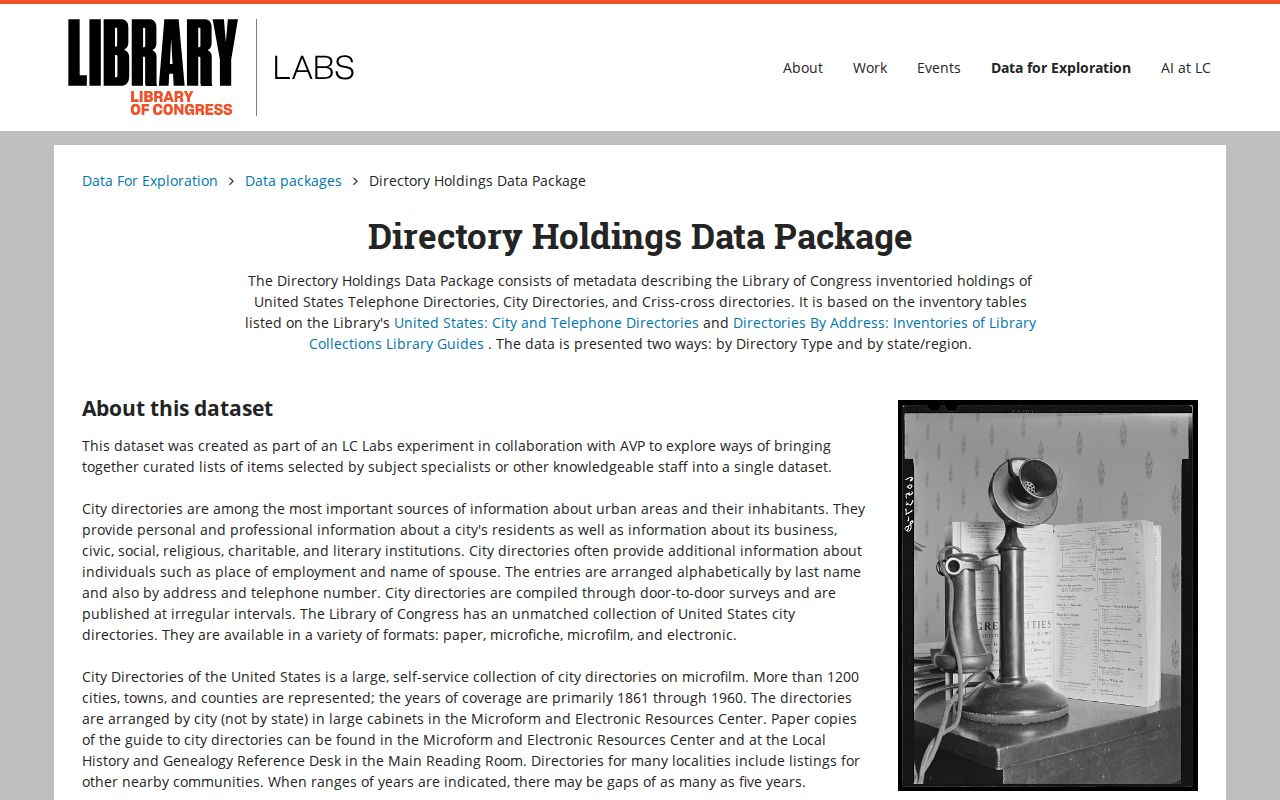
The metadata can lead to a digitized volume, but its collection record is discovery information rather than a local Fair Oaks roster.
Fair Oaks Directory Sources Online
Physical and digital sources work together for Fair Oaks city directory research. The Library of Congress city and telephone directory guide explains that city directories can hold personal, professional, business, civic, spouse, address, and telephone information. It also cautions that publication is irregular and coverage can extend into nearby communities. George Mason Special Collections, the Library of Virginia, and other repositories can supply companion material, while the Virginia Room remains the local place to confirm its own holdings.
Search results need a citation trail. Preserve the archive's exact title, edition, page, arrangement, geographic statement, and any visible omission. The page image, cover or title page, and locality introduction form a stronger Fair Oaks archive record than a bare name hit. For current Fair Oaks address-keyed work after a historical lead is established, use the Fair Oaks street directory instead of treating an old volume as a modern location check.
The Library of Congress collection guide describes the directory forms and their uneven coverage.
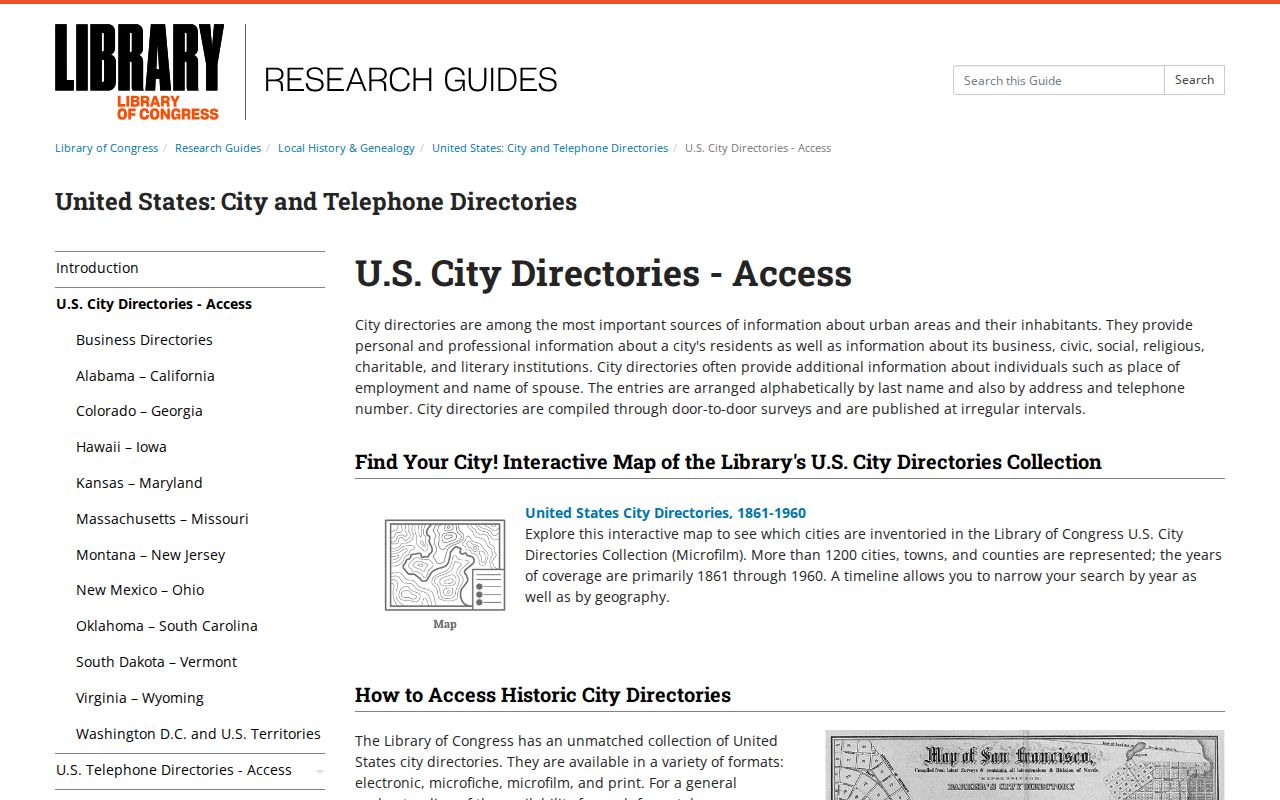
That guide helps a Fair Oaks researcher distinguish a digitized discovery path from the local library's physical holdings.
Fair Oaks Household Directory Trail
For family history, follow a Fair Oaks household through separate dated sources rather than forcing one book to answer every question. First choose an edition whose locality statement includes Fair Oaks. Then record the listing exactly as printed. A name that changes form can reflect initials, marriage, a widow reference, a business listing, or an ordinary spelling difference. The goal is a documented sequence, with each item tied to its own year and geographic scope.
- Find the first Fair Oaks-inclusive edition that plausibly covers the surname or address, and capture the title, year, page, and locality statement.
- Search forward through later Fair Oaks volumes, recording address changes, name variants, telephone detail, and any change in the listing type.
- Check an address-oriented or criss-cross volume when the address is known, but confirm that the book's exchange or suburban coverage fits the Fair Oaks location.
- Pair the directory dates with census years, newspapers, yearbooks, photographs, deeds, tax books, or probate material according to the question at hand.
- Log both positive and negative searches. An absent Fair Oaks listing can indicate an unlisted number, an omitted area, a gap, or a different printed name.
A directory disappearance is not proof of a move or death. It is a reason to test the next edition, review the volume's coverage, and then use a record type that answers the remaining question. Fairfax directories are most useful as a dated household layer between other historical records.
Fair Oaks Directory Gaps
Fair Oaks historical research sits inside Fairfax County and Northern Virginia record history, not a separate municipal archive. Earlier records may use a county district, road, subdivision, farm, post office, or later postal label instead of Fair Oaks. Fairfax also carries a lost-records-locality warning linked to Civil War destruction, looting, and fire. The Historic Records Center notes missing pre-1865 loose papers and periods without local birth and death recording. A Fair Oaks no-result can reflect a surviving-record gap rather than a missing household.
Directories can bridge some intervals, but they are not a cure for every gap. Compare the record creator, date, geographic scale, and whether an item is an index, original, map, image, or narrative survey. That approach keeps Fair Oaks history clear when a county book and a directory tell different parts of the same story.
Note: Keep a no-result with the searched edition and locality wording, because silence can be a coverage problem rather than a historical conclusion.
Fair Oaks Archive Preservation
Fair Oaks local directory work often leads into the Fairfax Historic Records Center. In 2025, the center reported about 2,300 books and 750 boxes and received a Library of Virginia preservation grant of $21,450.60 for the 1879 Atlas of Fairfax County and 1892, 1900, and 1910 land-tax books. The grant is a useful reminder that older Fair Oaks materials may have handling limits or changing availability. The HRC recommends appointments for research, and fragile original books may be consulted in limited quantities without photocopying.
The HRC preservation announcement provides the dated collection context. For a Fair Oaks directory trail, use a printed listing to locate the right household period, then select deeds, tax books, maps, or probate only when those records answer a separate, supportable question.